The useful idea
A successful transition begins with a prepared receiving pen and consistent care, rather than simply a date in the breeding calendar.
The starting point
Weaning changes a piglet’s diet, surroundings and social group. Prepare it as a coordinated job for the breeding, nursery, feed and veterinary teams. Reducing avoidable disruption helps staff manage feeding and water access and identify problems early.
In Ghana, warm afternoons do not remove the need to protect young pigs from wet floors, draughts and cool rainy nights. Plan for the receiving building’s actual conditions. The weaning decision depends on readiness, health, nutrition and the production system; an age copied from another country is not enough.
Prepare the receiving area before pigs move
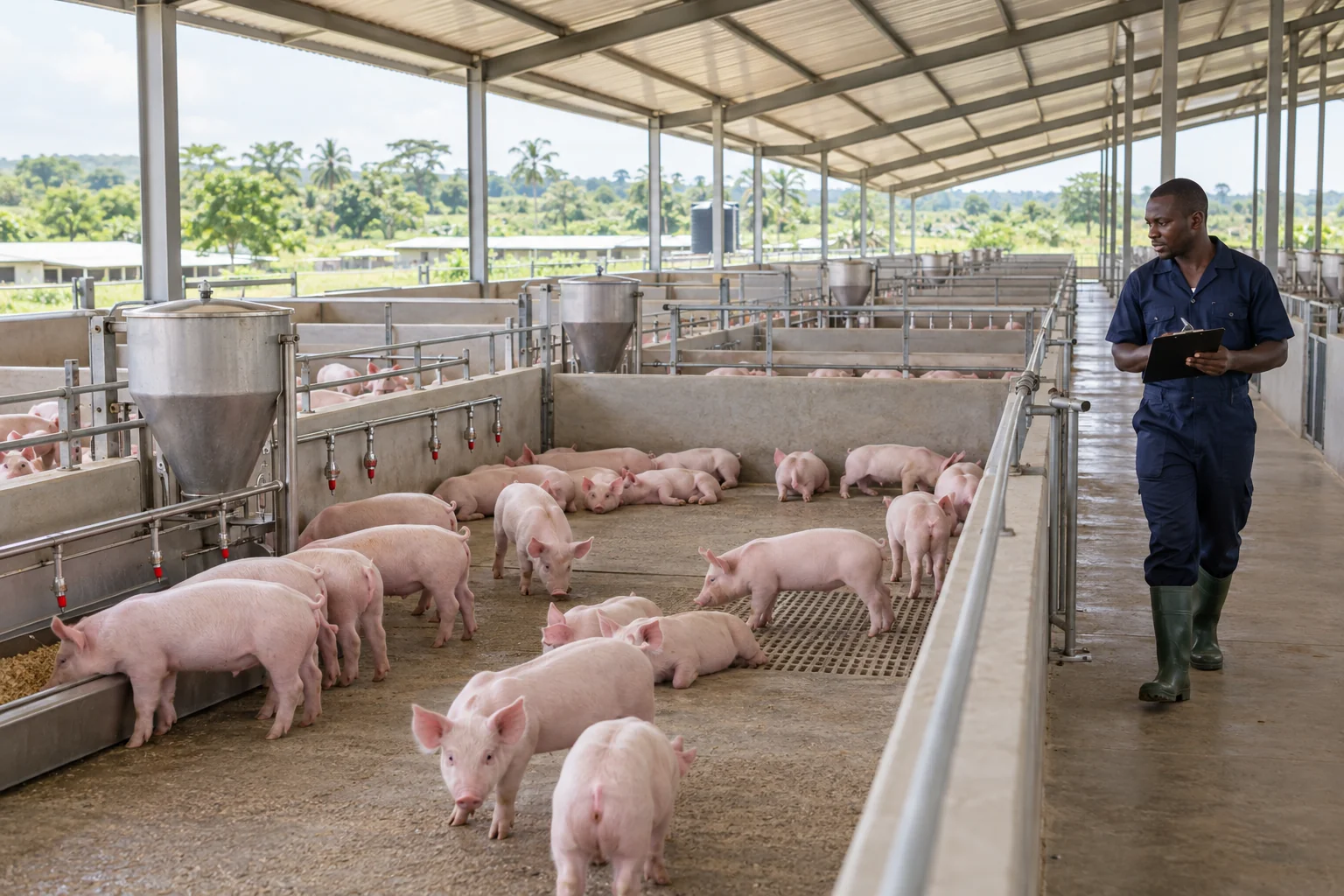
Clean and prepare the pen under the veterinary-led procedure, allowing the required turnaround before arrival. Check dry resting areas, suitable warmth where needed, ventilation, drinker access and feeders. Test equipment instead of assuming an empty pen is ready.
Keep identifiable groups and a clear stock count. Where batch separation is used, organise the work so late arrivals do not continually mix with established groups. Provide dedicated tools and sensible staff routes between age groups.
Make the feed and water transition deliberate
Have the correct nursery feed ready before transfer. Ghanaian byproduct research includes different pig stages, underlining the need to match nutrition to the animals. An inexpensive grower mix or untested cassava or insect ingredient should not become an improvised first feed for vulnerable piglets.
Show staff how to confirm pigs can reach and use the drinking supply. Observe eating and drinking and record concerns by group. Agree diet changes with the nutritionist, using the actual feed supplied rather than assuming a product name describes its analysed quality.
Protect comfort while maintaining ventilation
Inspect resting behaviour at different times of day. Keep sleeping areas dry and protect small pigs from inappropriate draughts while maintaining effective air exchange. Avoid cooling the entire nursery in a way that chills the youngest pigs.
After rain, check leaks, surface water and moisture carried in on boots or equipment. Before hot periods, review shade and water reliability. Historical Ghanaian herd research and international welfare guidance support animal observation; neither supplies a complete thermostat or pen-design specification for this site.
Identify a struggling group and learn from it
Record starting numbers, transfers, weights where practical, feed, deaths, removals and unusual observations. Poor feeding, persistent diarrhoea, weakness or a rapid change in several pigs needs veterinary assessment. Routine antibiotics should not substitute for investigating nutrition, water, hygiene or disease.
Review whether pigs were ready, the pen was prepared and staff had to improvise. Link nursery records to litter and sow information where possible. West African farms can use the same review method with their own veterinary service, climate and feed supply.
Take it back to the team
Your practical checklist
- Prepare and test the receiving pen first.
- Agree readiness and diets with the technical team.
- Observe feed and water use after transfer.
- Protect dry, age-appropriate resting space.
- Record the batch and escalate illness promptly.
Sources & further reading
Start with the Ghanaian evidence and services below. The location and application notes explain how regional and international references should be used.
Ghana · on-farm research
CSIR: pig-feed packages using agro-industrial byproducts (2007) (opens in a new tab)Older trials across Ghanaian regions support evaluating byproducts. Historical costs and experimental diets are not current commercial specifications.
Ghana · historical herd research
Kabuga and Annor: seasonal swine reproduction in Ghana (1991) (opens in a new tab)Older station and commercial-farm records show why local seasonal monitoring matters. They do not establish current performance targets or a universal response to weather.
Ghana · animal-health services
MoFA: Veterinary Services Directorate (opens in a new tab)A starting point for veterinary support. Discuss the herd’s health plan with an appropriately qualified local veterinarian.
International · pig-welfare framework
WOAH: welfare and pig production systems (2024 edition) (opens in a new tab)Use animal-based observations as a framework. Warmth, cooling, ventilation and daily checks must fit Ghana’s climate and the pigs; this is not a local building specification.