The useful idea
A controlled boundary and a reporting routine that everyone follows are foundations of a dependable pig business.
The starting point
On a Ghanaian commercial pig farm, disease prevention starts with everyday movements: a pig bought from another herd, a shared transport vehicle, a feed delivery or a visitor walking between pens. Expansion makes these movements more frequent. Biosecurity belongs in purchasing, staffing and site design rather than only on a notice at the gate.
Ghana’s Veterinary Services surveillance handbook includes African swine fever. Use the district veterinary service for current local instructions. This guide offers a management framework; it does not certify a herd as disease-free or replace an outbreak response.
Design a boundary people can actually use
Map the route from the public road to unloading, staff changing and animal buildings. Keep unnecessary vehicles outside controlled livestock areas. Feed and loading arrangements should let suppliers complete their work without walking through the herd.
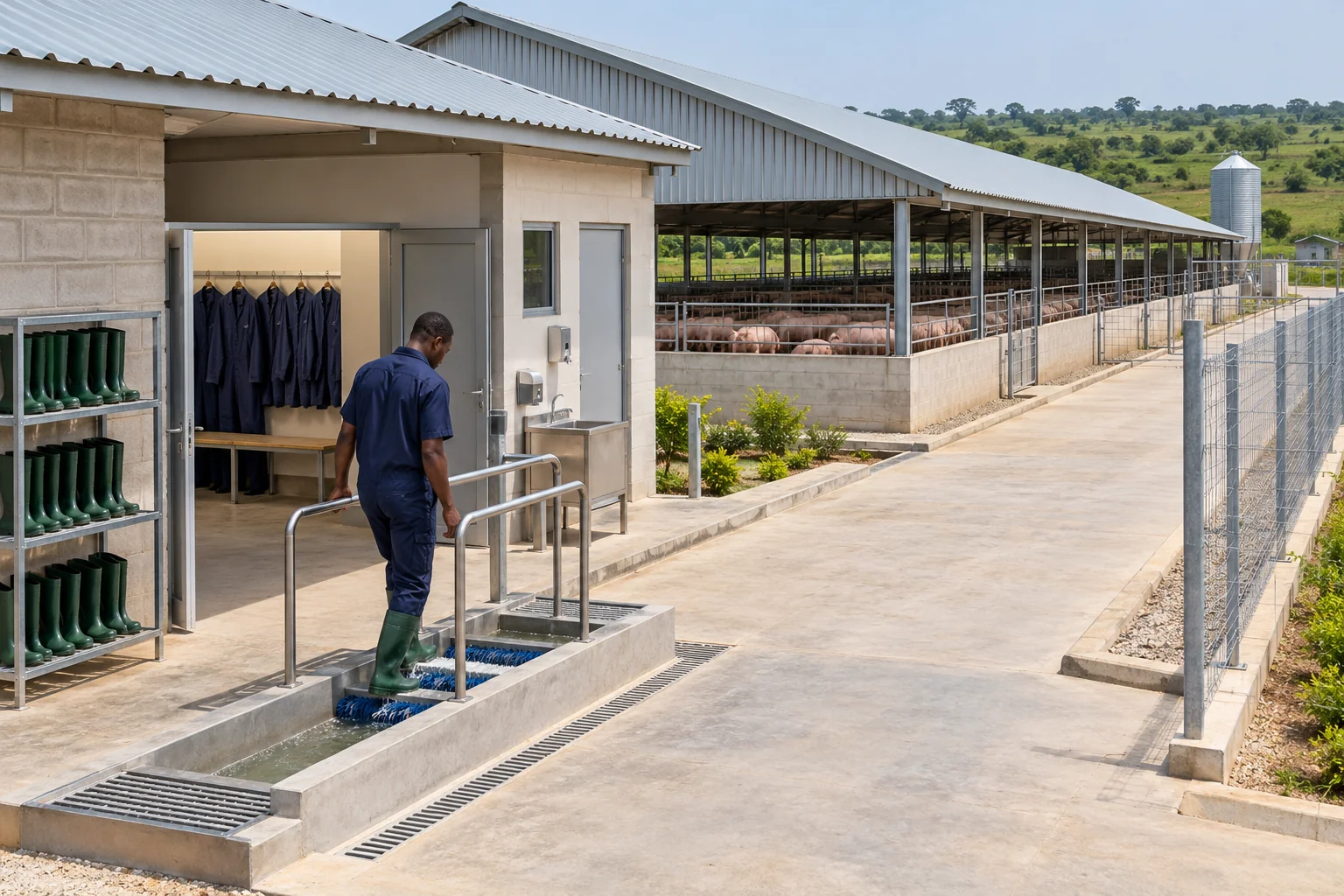
Provide dedicated clothing and footwear, handwashing and maintained cleaning facilities according to the veterinary plan. Assign someone who can enforce rules for familiar suppliers and senior visitors as well as strangers. In wet weather, check that mud and runoff have not bypassed the intended clean route.
Buy pigs with records and a receiving plan
Agree the source, animal identification, health information and arrival arrangements before paying for replacement stock. An attractive market price does not establish health status. Retain the seller’s details and transport records so an incoming batch can be traced.
Ask the veterinarian to define separation, observation, any indicated testing and the conditions for joining the resident herd. Keep incoming pigs and their equipment genuinely separate. A fixed number of days copied from an overseas checklist does not account for the farm’s health status or Ghana’s current disease situation.
Control feed, tools and transport as well as animals
Prevent pork-containing scraps and uncontrolled kitchen waste from becoming a feed route. Use traceable ingredients and keep feed reception away from manure handling. Do not circulate equipment between farms without an appropriate cleaning procedure.
Review shared trucks, market visits, returning staff and service contractors. Agree cleaning and disinfection with the veterinarian, including suitable products and correct preparation. A dirty footbath or empty handwashing point should trigger repair rather than provide reassurance.
Report early and stop risky movements
Give every shift a contact list for the manager, herd veterinarian and district veterinary service. Unexpected deaths, unusual illness or a sudden change affecting several pens need prompt assessment. Staff should report observations rather than attempt their own diagnosis.
Do not sell or move suspect animals while seeking instructions. Retain recent stock, feed and visitor records. In neighbouring West African countries, use that country’s competent veterinary authority: Ghanaian contacts and movement instructions do not govern another country’s operation.
Take it back to the team
Your practical checklist
- Map animal, staff, vehicle and material routes.
- Maintain entry facilities and name the responsible person.
- Agree incoming-stock procedures with the veterinarian.
- Keep pork scraps and suspect feed outside the ration.
- Maintain local reporting contacts and movement records.
Sources & further reading
Start with the Ghanaian evidence and services below. The location and application notes explain how regional and international references should be used.
Ghana · official veterinary reference
Ghana Veterinary Services: disease surveillance handbook (2025) (opens in a new tab)Ghanaian disease-reporting context, including African swine fever. Ask the district service for current instructions; this dated handbook is not a live outbreak bulletin.
International · animal-health principles
WOAH: African swine fever (opens in a new tab)General transmission and prevention principles. Ghana’s Veterinary Services supplies the applicable local reporting, movement and outbreak-control instructions.