The useful idea
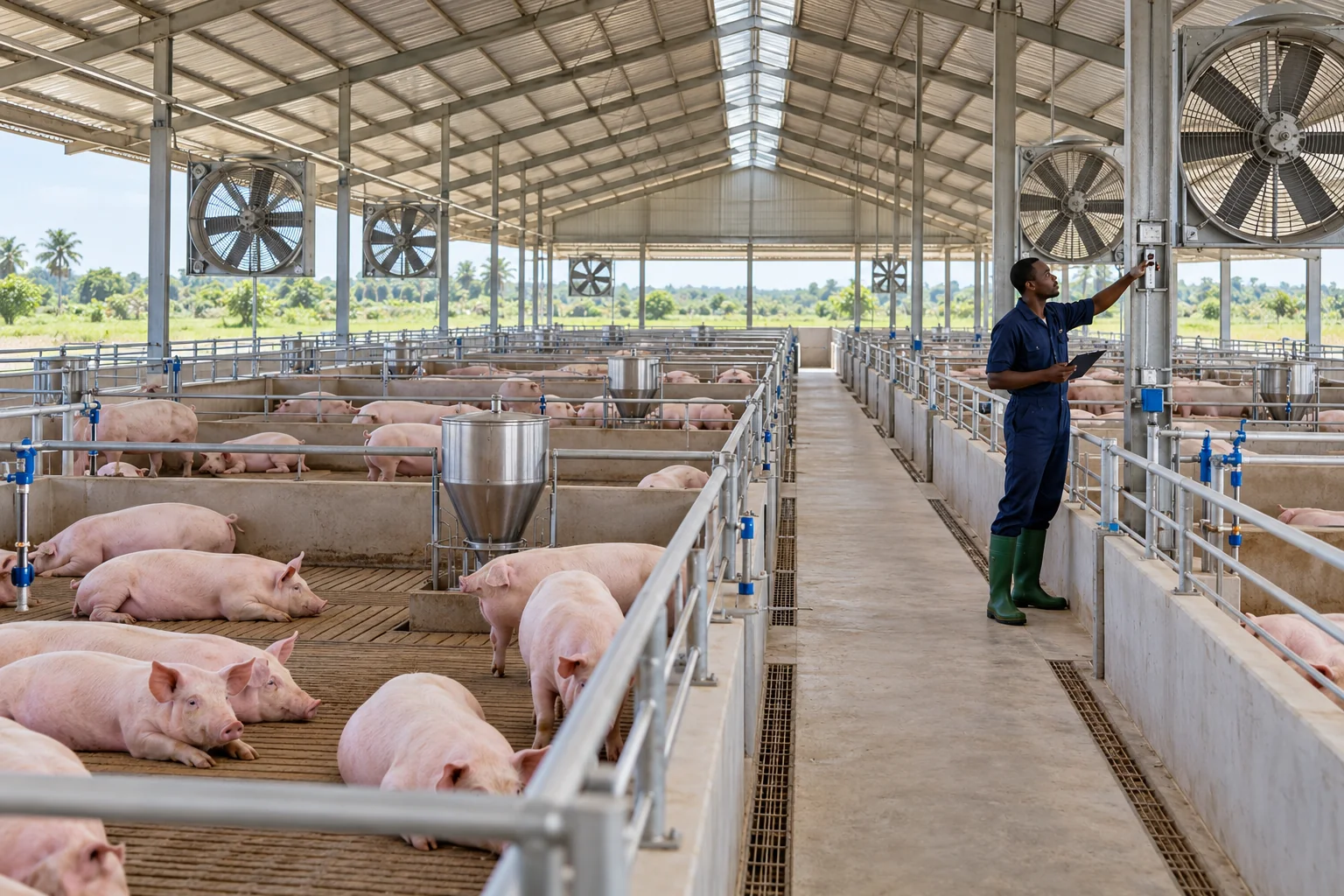
Observe pigs and the building together: cooling, water and backup arrangements must work as one daily routine.
The starting point
A warm climate does not mean every pig needs the same environment. Heavy finishers and lactating sows can struggle to lose heat, while young piglets may need a warm, dry protected resting area. A Ghanaian piggery must address both needs through its layout and management.
Conditions differ between a humid coastal location such as the lower Volta area and drier northern sites. Harmattan dust, rainfall, humidity and the reliability of water and electricity all belong in the design brief. Imported fan settings or a temperate-country calendar are not a local heat plan.
Observe animals at the difficult times
Check breathing, feeding, drinking and resting patterns during the warmest part of the day as well as on the morning round. Note whether problems cluster in one pen, roof section or the end of a water line. Keep observations alongside temperature and humidity readings taken where pigs are housed.
Severe respiratory distress, weakness or collapse needs urgent veterinary attention. Give staff a clear escalation route. General welfare observations are useful, but the actual pigs and local technical advice should determine the response.
Make the building work before adding equipment
Review roof heat, shade and unobstructed air paths with a livestock-building specialist. Do not stack materials where they block ventilation. Maintain fans, screens and inlets if fitted; dust and failed components can undermine the intended airflow.
Assess cooling against local humidity and drainage. Equipment that performs in dry air may be less effective in a humid coastal barn. Avoid persistently wet resting areas or chilling small piglets while trying to cool larger animals.
Check water at the drinker, not only the tank
Check functioning drinkers throughout the building and follow the adviser’s procedures for flow and access. Look for blocked fittings, warm exposed supply lines, leaks and interruptions at busy periods. A full tank does not prove that the last pen receives water.
Keep a repair kit and identify who can isolate a faulty line without interrupting the herd. Include borehole or mains interruptions, pump failure and backup-power supplies in the contingency discussion. Do not reduce drinking provision as a water-saving measure.
Use Ghanaian seasonal records to prepare
Move avoidable handling to cooler hours and maintain equipment before stressful weather. Historical research on Ghanaian herds examined seasonal reproduction and piglet mortality; it supports keeping local records, not adopting old results as current production targets.
Review current GMet information alongside barn observations. Rehearse a failed-pump or fan response when conditions are safe. These routines can help farms elsewhere in West Africa, while equipment sizing still needs the actual site’s climate and services.
Take it back to the team
Your practical checklist
- Observe pigs during the warmest hours.
- Keep age-group comfort needs separate.
- Check ventilation and drinking points across the barn.
- Budget spare parts and backup arrangements.
- Review local weather and rehearse the failure response.
Sources & further reading
Start with the Ghanaian evidence and services below. The location and application notes explain how regional and international references should be used.
Ghana · historical herd research
Kabuga and Annor: seasonal swine reproduction in Ghana (1991) (opens in a new tab)Older station and commercial-farm records show why local seasonal monitoring matters. They do not establish current performance targets or a universal response to weather.
Ghana · current forecast service
Ghana Meteorological Agency: seasonal forecast bulletins (opens in a new tab)Choose the latest bulletin for the relevant sector and season. Combine it with shorter-range updates and farm observations.
International · pig-welfare framework
WOAH: welfare and pig production systems (2024 edition) (opens in a new tab)Use animal-based observations as a framework. Warmth, cooling, ventilation and daily checks must fit Ghana’s climate and the pigs; this is not a local building specification.