The useful idea
Combine genetics with health, local performance and the farm’s capacity to support the next generation.
The starting point
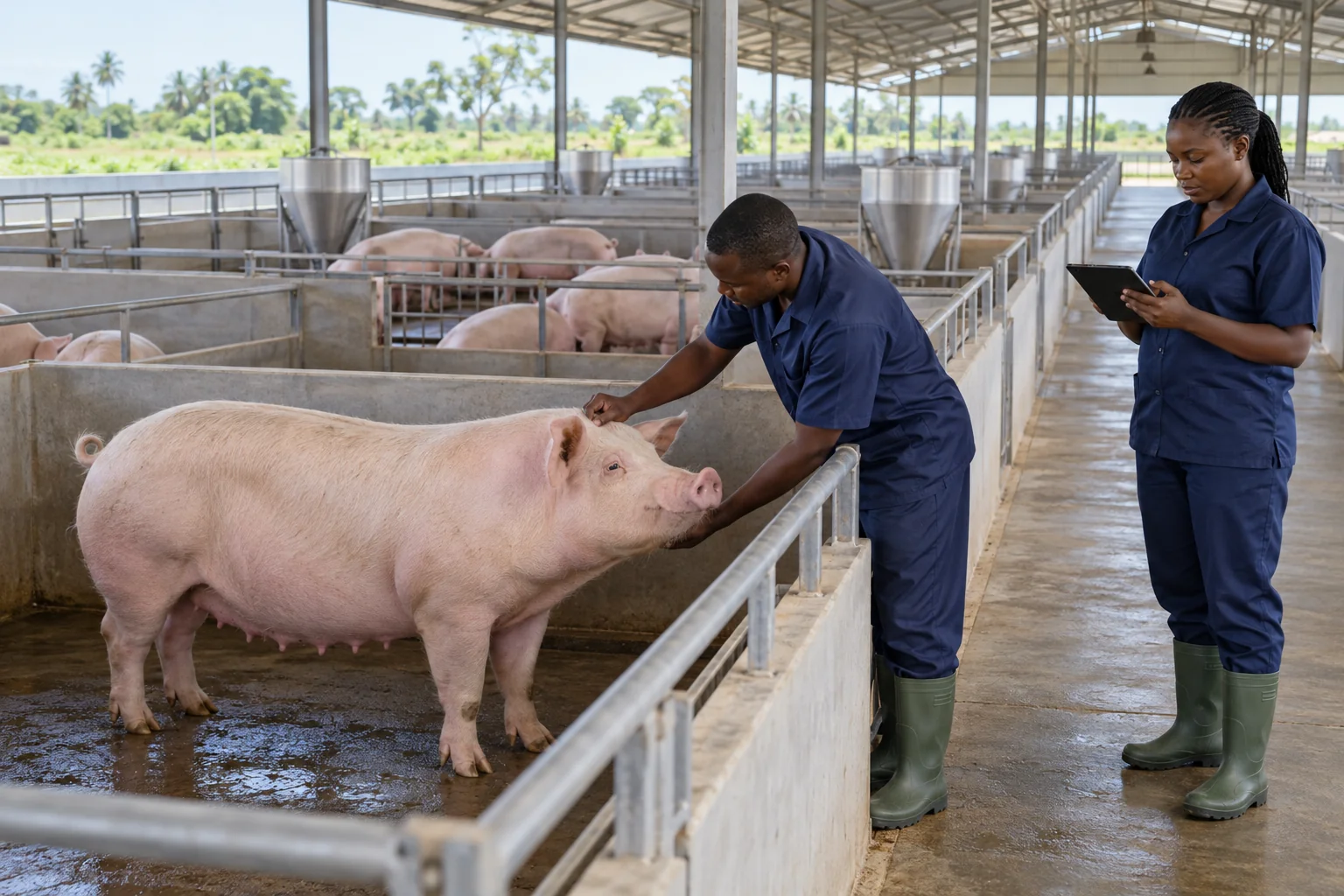
Breeding-stock purchases commit the farm to more than the price of an animal. Housing, feed, water, staff, health protection and customer requirements affect what genetics can deliver. Define the production goal before shopping for a breed name or an unusually large pig.
Use the herd veterinarian and a competent breeding adviser to assess replacements. Supplier records and performance under comparable conditions are more useful than a photograph. This guide does not recommend one breed for every Ghanaian farm or promise that imported stock will outperform a well-managed local herd.
Write the production goal before selecting stock
Decide whether the enterprise sells weaned piglets, breeding replacements or finished pigs, and define customer requirements. Identify the facilities and people available. A decision that increases potential output also increases demand for feed, housing and daily attention.
Assess relevant traits such as reproductive history, survival, growth, soundness and manageability with professional support. A Ghanaian local-production survey helps identify practical questions; it is not a breed ranking for commercial farms.
Check the supplier and protect the receiving herd
Ask for identification, parentage where available, breeding history, health information and the conditions in which stock was raised. Discuss how claimed performance was measured. Pedigree alone does not establish current fertility or health status.
Arrange transport, separation and entry checks before arrival. Use Ghana’s Veterinary Services and current official requirements for imports or cross-border movements. An invoice and a healthy appearance are not the whole receiving procedure.
Keep a breeding calendar the team reviews
Record animal identity, observations, service dates, sire or semen source, checks, farrowing information and the number of pigs eventually weaned. Give named staff responsibility for observations and record entry. Specialist procedures require trained personnel rather than instructions from a general article.
Investigate repeat services, losses and changes in condition with the technical team. Historical Ghanaian reproduction research does not establish current targets. Compare like groups in the farm’s own system before attributing a result to genetics or climate.
Review contribution over time
Relate reproductive results to feed, housing, labour, replacement and health costs. Avoid selecting from one striking litter or one difficult season. Preserve the history needed to identify related animals and discuss mating plans that manage inbreeding.
Before expansion, confirm nursery space, feed and a realistic market for extra piglets. Sustainable breeding requires the whole production chain to support it. Across West Africa, evaluate suppliers carefully and check movement rules, services and customer preferences country by country.
Take it back to the team
Your practical checklist
- Define the enterprise and customer.
- Obtain identification, breeding and health records.
- Plan veterinary-led receiving arrangements.
- Maintain sow, service, litter and weaning records.
- Review results alongside costs and nursery capacity.
Sources & further reading
Start with the Ghanaian evidence and services below. The location and application notes explain how regional and international references should be used.
Ghana · farmer survey
Aryee and colleagues: local pig-production practices in Ghana (2019) (opens in a new tab)Mostly semi-intensive production. Useful management context, rather than benchmarks or a breed ranking for modern commercial units.
Ghana · historical herd research
Kabuga and Annor: seasonal swine reproduction in Ghana (1991) (opens in a new tab)Older station and commercial-farm records show why local seasonal monitoring matters. They do not establish current performance targets or a universal response to weather.
Ghana · animal-health services
MoFA: Veterinary Services Directorate (opens in a new tab)A starting point for veterinary support. Discuss the herd’s health plan with an appropriately qualified local veterinarian.
Ghana · technical and enterprise support
GAEC–BNARI: pig management and agribusiness training (opens in a new tab)A route to training in pig management, nutrition and records. Confirm current services directly; no partnership or endorsement is implied.