The useful idea
Measure demand and secure suitable water quality before buying more storage. Rain collection is one part of the supply plan.
The starting point
A Ghanaian pig farm can receive intense rain yet face a shortage later. Drinking, wash-down and staff needs continue between storms. Separate the quantity needed each day from what a catchment or borehole can reliably supply through the year.
The lower Volta area, wetter forest locations and northern sites do not share one water calendar. GMet information helps with seasonal planning, but the farm still needs its own demand and storage records. A general rain-harvesting guide cannot specify the right tank for every commercial unit.
Write a water budget by use
Record livestock drinking, cleaning, irrigation where relevant and domestic demand separately. Read meters where available and investigate leaks. Check the busiest and hottest periods, not just an average day with fewer pigs on site.
For illustrative arithmetic, a measured requirement of 20,000 litres a day would need 100,000 litres for five days before losses and reserve. Those figures are an example, not a drinking allowance or a Ghanaian farm standard. Size the system from actual animals and activities.
Match catchment, source and storage
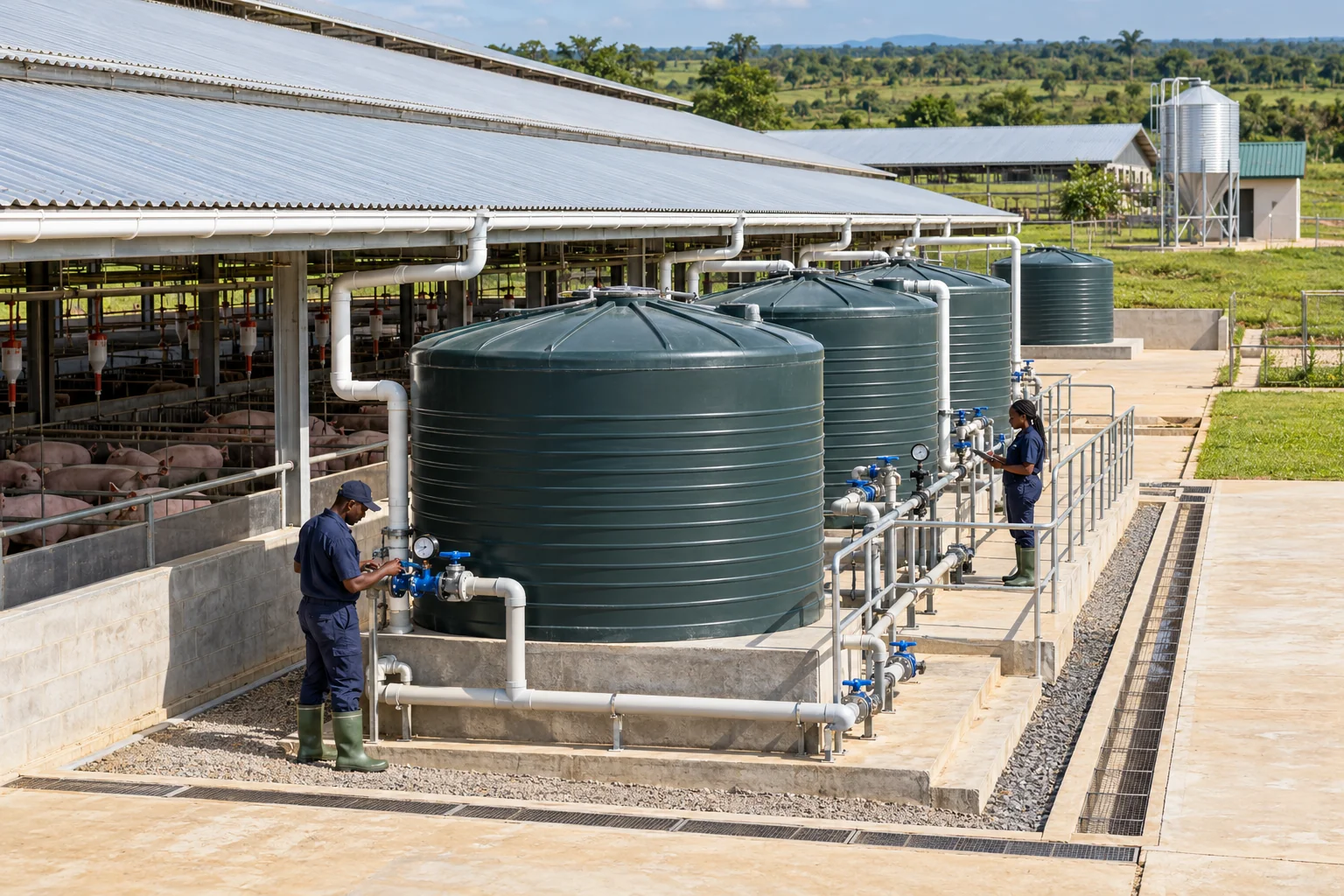
Assess roof area, local rainfall, collection losses, tank capacity and overflow together. A large tank without dependable inflow can be poor value, while a small tank may overflow during rain and empty quickly. Include safe foundations, cleaning access and maintenance.
Keep a realistic backup for periods when rainfall does not refill storage. Consult Ghana’s Water Resources Commission about requirements for the proposed source and use, particularly surface or groundwater abstraction. Do not assume a small-farm exemption applies to a commercial pig unit.
Protect quality and keep supply routes distinct
Roof or yard water is not automatically drinking water. Identify catchment contamination and agree appropriate testing, treatment and maintenance for each use. Cover suitable storage and protect pipework from backflow or connections to lower-quality water.
Keep manure runoff, chemicals and wastewater away from clean supplies. Define which tanks serve which activities and train staff accordingly. Sampling and treatment should be advised for the actual source rather than copied from a foreign system with different contamination risks.
Set practical shortage and maintenance triggers
Assign checks for tank levels, drinkers, leaks, valves and pumps. Agree when low storage triggers an extra supply, repairs or changes to non-essential uses. Drinking provision remains essential; saving water should come from reducing avoidable loss and improving cleaning arrangements.
Review the plan after dry weather and heavy rain. In other West African countries, use the national forecast and water authority rather than assuming Ghanaian permissions or seasonal advice apply across the border.
Take it back to the team
Your practical checklist
- Measure ordinary and peak demand by use.
- Investigate leaks before expanding supply.
- Design catchment, storage and overflow together.
- Agree quality checks and distinct pipe routes.
- Set a shortage trigger and a dependable backup.
Sources & further reading
Start with the Ghanaian evidence and services below. The location and application notes explain how regional and international references should be used.
Ghana · current forecast service
Ghana Meteorological Agency: seasonal forecast bulletins (opens in a new tab)Choose the latest bulletin for the relevant sector and season. Combine it with shorter-range updates and farm observations.
Ghana · water-resource authority
Ghana Water Resources Commission: water-use questions (opens in a new tab)Includes livestock watering and water-use permissions. Confirm current permit or registration requirements for the proposed activity and source directly with WRC.
International · water-management principles
FAO: water harvesting and storage (opens in a new tab)Collection and storage options, not site-specific tank sizing or proof that harvested water is safe for pigs to drink.