
The useful idea
Specify the water service the farm must receive, then choose the pump, panels, storage and backup needed to deliver it.
The starting point
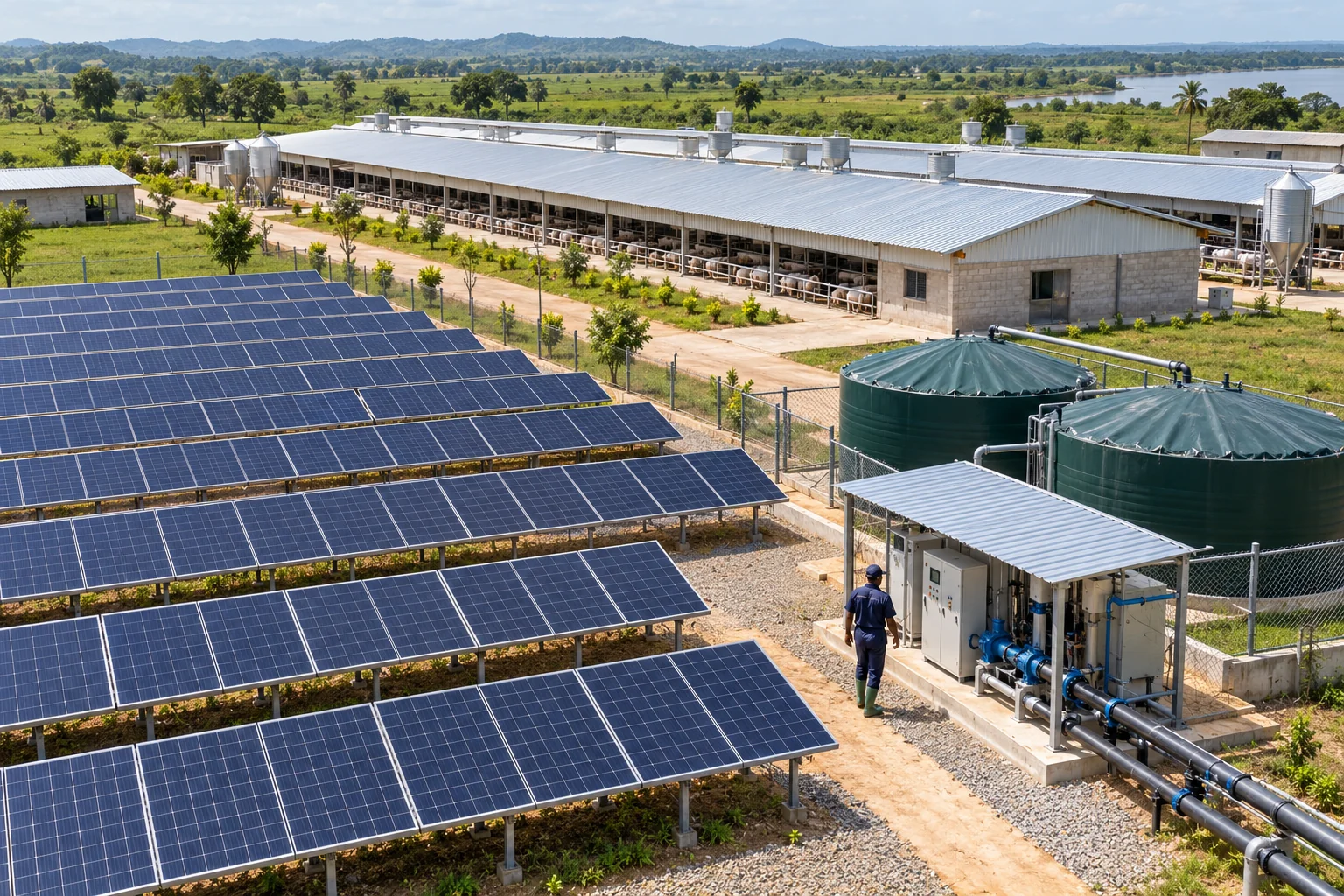
Solar power can support a Ghanaian farm water system, but panel capacity is only one part of a reliable service. Pigs need water outside sunny hours too. A design must connect demand, source yield, pumping conditions, storage, controls and maintenance.
For a commercial unit, start with a written requirement rather than a package advertised by panel wattage. Ghana’s Energy Commission and Water Resources Commission provide relevant local guidance. A successful installation in another country does not establish a suitable pump or source for this farm.
Define demand and investigate the water source
Use the herd and cleaning plan to establish ordinary and peak demand. Include future expansion separately so the initial system and later additions are clear. Have a competent professional assess source capacity and suitability rather than assuming the pump can run continuously.
Check the applicable Ghanaian abstraction, registration or permit arrangements with WRC before committing to works. Consider seasonal source changes and existing users. Solar energy does not make the underlying water resource unlimited.
Specify pump duty and useful storage
A pump must deliver the required flow against the actual lift and system resistance. Pipe layout, distance, tank height and operating conditions affect performance. Ask the designer to state assumptions and the service the farm should receive under those conditions.
Assess storage against night-time demand and supply interruptions. Water storage and electrical batteries solve different problems, and a specialist should compare the options. Do not use a foreign panel-to-pump rule of thumb as a substitute for site measurements.
Choose a serviceable installation
Request suitable local design, installation and electrical-safety support. Consult current Ghana Energy Commission guidance and check the provider’s relevant credentials. Ask about spare pumps, controllers, servicing and response time in the farm’s district.
Plan safe access, equipment protection, earthing and staff training with the installer. Keep records of warranties, settings and the as-built layout. An installation is only dependable if a fault can be recognised and repaired without leaving pigs short of water.
Measure delivery and protect against failure
Record water delivered, storage levels and downtime rather than measuring success only by the presence of panels. Inspect leaks, controls, mounting and cleaning needs under the maintenance plan. Harmattan dust, storms and access all belong in that schedule.
Rehearse the backup supply and review running costs, replacement costs and energy use. Across West Africa, repeat the source and service assessment locally: Ghanaian licensing, rainfall and supplier support cannot be assumed for another country.
Take it back to the team
Your practical checklist
- Write the required daily and peak water service.
- Assess the source and confirm applicable permissions.
- Specify pump duty, storage and backup.
- Choose competent local installation and servicing.
- Monitor actual delivery and rehearse a failure response.
Sources & further reading
Start with the Ghanaian evidence and services below. The location and application notes explain how regional and international references should be used.
Ghana · energy-service guidance
Ghana Energy Commission: renewable-energy guidance (opens in a new tab)Includes solar water-pump service-provider guidance. Check the provider’s current suitability and authorisation; foreign specifications are not local approvals.
Ghana · water-resource authority
Ghana Water Resources Commission: water-use questions (opens in a new tab)Includes livestock watering and water-use permissions. Confirm current permit or registration requirements for the proposed activity and source directly with WRC.
Ghana · current forecast service
Ghana Meteorological Agency: seasonal forecast bulletins (opens in a new tab)Choose the latest bulletin for the relevant sector and season. Combine it with shorter-range updates and farm observations.