The useful idea
Treat compost as a controlled process with a receiving field and a nutrient plan, rather than a place to leave manure.
The starting point
A commercial Ghanaian pig unit produces manure throughout the year, while crop demand and field access change with the season. Composting suitable material can create a useful connection with crop production, but storage, treatment, labour and drainage still need planning.
Work involving pig manure at Kwadaso provides a Ghanaian research reference. Its experimental results are not a recipe or an application rate for another farm. Begin with the materials, handling equipment, rainfall and receiving soils on the actual site.
Know the incoming material
Separate manure and suitable plant residues from plastics, wire, chemicals and other rubbish. Record sources, quantities and dates. Bedding, wash-water content and collection methods change the material arriving at the compost area, so batches may need different handling.
Plan the mix with a competent compost adviser. Air, moisture and structure influence the process; adding dry material without checking its cleanliness or suitability is not a reliable recipe. Do not treat potentially contaminated waste as suitable simply because it is organic.
Design for rain, access and clean-water protection
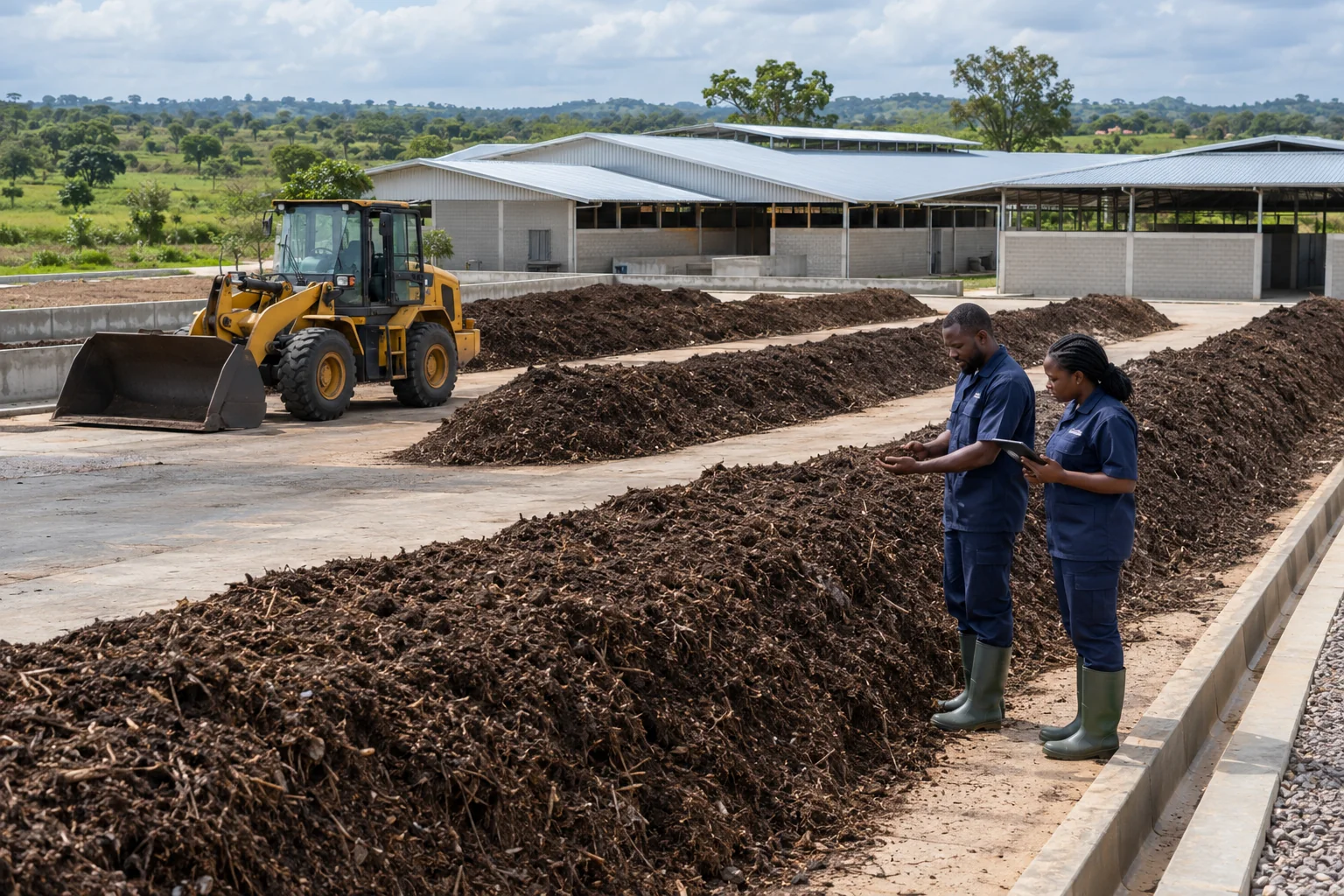
Choose a working area accessible to staff and machinery through the wet season. Separate clean stormwater from contaminated runoff. A specialist should assess containment, drainage, loading routes and protection of water sources and neighbouring land.
Provide distinct raw, active and finished-material areas. Keep manure vehicles and tools away from clean feed and animal-entry routes. Budget for turning, curing, covered storage where needed and safe loader operation, not just the first collection point.
Monitor a process instead of counting weeks
Identify batches and assign someone to record observations, temperature and moisture using an appropriate method. Investigate waterlogging, drying or unusual odours. Agree treatment and hygiene checks suitable for the material and intended use.
Time alone does not establish maturity or pathogen reduction. Keep curing and release decisions separate from the pressure to make space for new manure. Give workers suitable protective equipment, handwashing and clear handling procedures.
Match nutrients and timing to Ghanaian fields
Use soil information and appropriate material analysis to plan the receiving crop, quantity and timing. Pig-derived compost is variable. Do not spread a uniform rate everywhere or interpret the nutrient results from a Ghanaian experiment as the composition of your product.
Record applications by field and avoid unsuitable conditions or runoff risk. Include transport, labour and storage in the decision. Across West Africa, adapt the same process to local soils, rainfall and environmental requirements; a circular system still needs controlled nutrient use.
Take it back to the team
Your practical checklist
- Separate and record incoming material.
- Protect water and maintain wet-season access.
- Monitor treatment and curing by batch.
- Plan field applications using local soil information.
- Include handling, transport and labour in the budget.
Sources & further reading
Start with the Ghanaian evidence and services below. The location and application notes explain how regional and international references should be used.
Ghana · KNUST and CSIR-linked work at Kwadaso
Acheampong and colleagues: compost nutrient release (2025) (opens in a new tab)The experiment included pig manure and other materials. Its results are not an application rate or hygiene certificate for another farm’s compost.
International · process reference
FAO: composting processes and techniques (opens in a new tab)Use aeration, moisture and monitoring principles. Adapt materials, rainfall protection and handling to the Ghanaian site.