
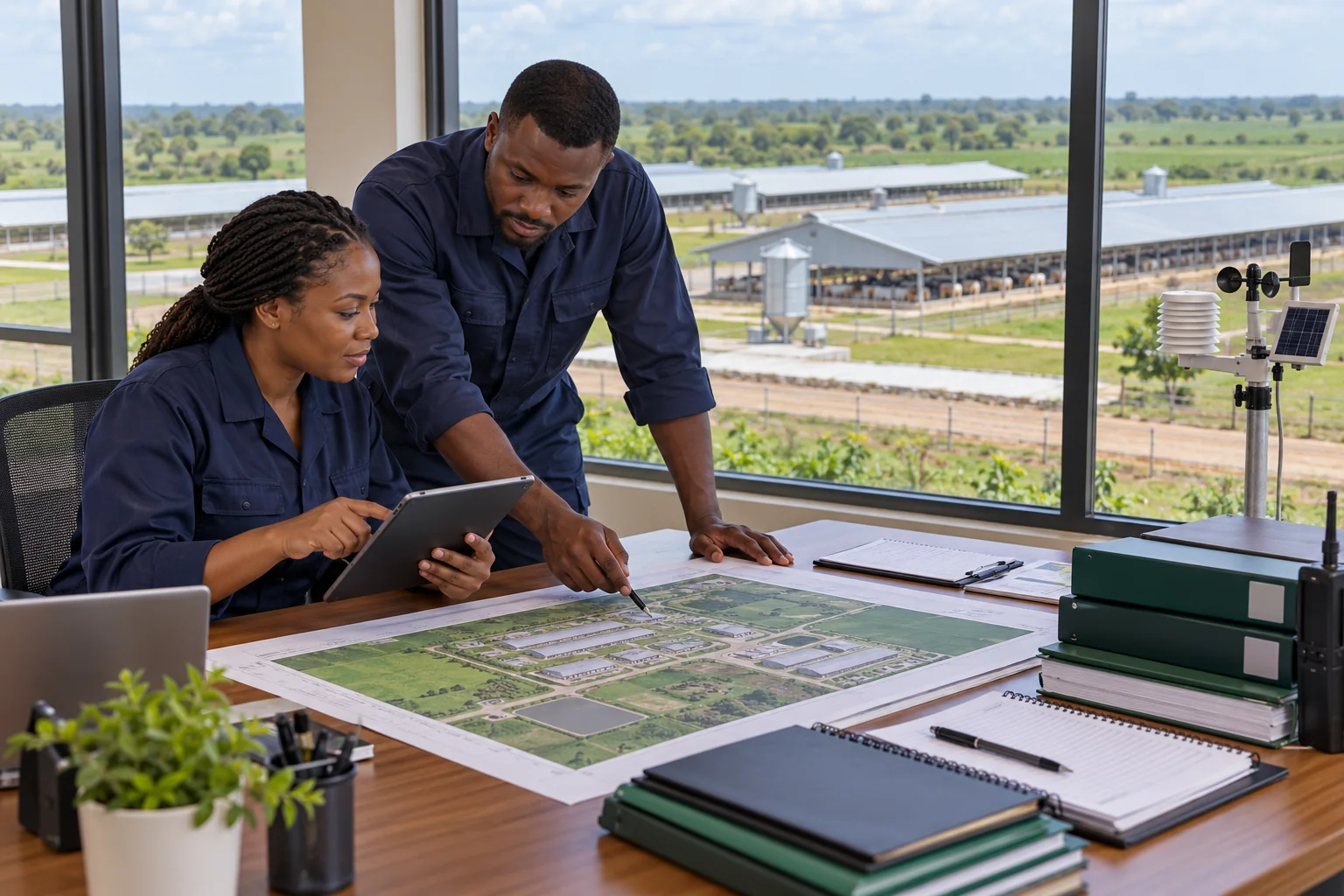
The useful idea
Use current local forecasts to prepare choices, then combine updates with farm observations and named responsibilities.
The starting point
A pig enterprise operates throughout the year even when crop activities follow a planting season. Feed buying, grain drying, water reserves, manure handling and road access connect the pig unit to Ghana’s weather. A seasonal plan should identify these decisions rather than only mark dates.
Southern and northern Ghana have different rainfall patterns, and conditions vary within each area. Use the current GMet bulletin for the relevant sector and local advice. A broad West African outlook cannot substitute for the farm’s district conditions.
Match the forecast to the decision
Distinguish a seasonal outlook from shorter-range weather information. Use the first to prepare supply and maintenance options and the second to support near-term movements and field work. Neither promises rain on an individual field on a particular day.
Record the bulletin date and area covered. GMet’s sector advisories illustrate district variation and dry-spell planning, but an old 2026 document should not be reused as a later season’s forecast. Ask the local extension service to explain unfamiliar terminology.
Connect pig care with supplies and access
List weather-sensitive tasks: handling animals, moving manure, drying feed ingredients, collecting cassava byproducts and maintaining pumps or fans. Give each task a responsible person and an alternative if the preferred timing becomes unsuitable.
For a Volta Region unit, assess local drainage and route access instead of assuming that regional rainfall totals describe the yard. A northern operation may place different emphasis on dry-season supplies. Both should maintain essential water and animal checks throughout disruption.
Use purchasing and storage records together
Compare feed demand with protected storage, supplier lead times and cash commitments. Prepare for changes in ingredient availability without stockpiling more than the store can manage safely. Include testing and drying capacity in purchasing decisions.
Keep short records for rainfall observations, water use, feed batches, equipment downtime and delayed movements. Use consistent units and identify the group or batch. A maintained notebook can be more useful than an elaborate system without responsible staff.
Review what changed before repeating the plan
Compare assumptions with actual results. Separate a weather disruption from a pump fault, late order or missed maintenance job. Identify an early warning and the response that would have helped. Do not judge the whole system from one unusually good or difficult period.
Turn the review into a few actions with deadlines. Use current Ghanaian costs for investment decisions. Regional West African farms can share management methods, while each country’s forecast service, regulations, currency and supply routes remain distinct.
Take it back to the team
Your practical checklist
- Use the current Ghanaian forecast for the correct area.
- Identify weather-sensitive pig and crop activities.
- Prepare alternatives for water, feed and access.
- Keep concise records with named owners.
- Review outcomes and update a few practical actions.
Sources & further reading
Start with the Ghanaian evidence and services below. The location and application notes explain how regional and international references should be used.
Ghana · current forecast service
Ghana Meteorological Agency: seasonal forecast bulletins (opens in a new tab)Choose the latest bulletin for the relevant sector and season. Combine it with shorter-range updates and farm observations.
Ghana · dated planning example
GMet: sector advisories for the 2026 seasonal forecast (opens in a new tab)Illustrates district differences and planning for dry spells. Do not reuse the 2026 outlook as a forecast for another season.
International · management teaching framework
FAO: Farm Business School handbook (opens in a new tab)Adapt methods to Ghanaian cedi costs, pig-production cycles and local markets. Example budgets are not local quotations.