
The useful idea
Report sudden deaths or unusual illness promptly. Pause pig movements and call the district veterinary service for instructions.
The starting point
African swine fever (ASF) is a serious viral disease of pigs. It can cause sudden deaths and severe losses for pig producers. People do not catch ASF. It is a separate disease from swine influenza.
On a commercial pig farm in Ghana, every shift plays a part in prevention. Staff who buy animals, receive deliveries, load trucks and check pens all need to know who to call when something looks wrong.
How the disease can reach a herd
Infected pigs can spread ASF to other pigs. Contaminated pork products, clothing, boots, tools and vehicles can also carry the virus between locations. This is why a farm’s purchasing, feeding and transport routines matter alongside the rules at its gate.
Keep livestock loading and outside deliveries away from regular staff routes where possible. Use traceable feed and keep pork scraps and uncontrolled food waste out of pig feed. Ask your veterinarian to review procedures for shared vehicles, visiting contractors and equipment.
Make prevention part of each shift
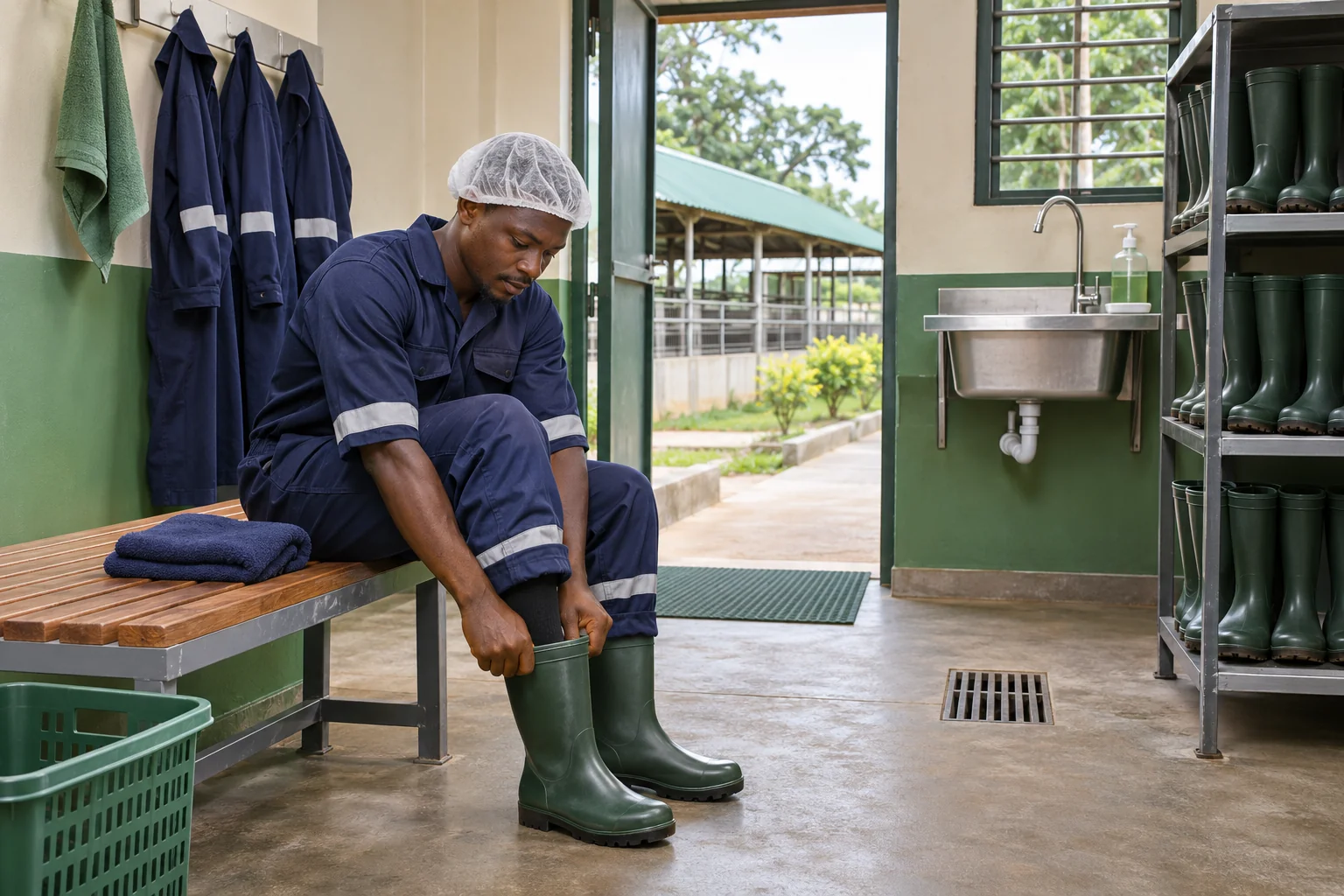
Agree a clear boundary for livestock areas and show it to staff, drivers and contractors. Provide clean farm footwear and clothing at the entry point. Keep handwashing and cleaning facilities usable, and report when supplies run out. In the wet season, check whether mud or runoff has made a designated clean route unusable.
Buy pigs from a traceable source and keep animal identification and transport records. Before arrival, ask the herd veterinarian to agree how incoming pigs will be housed separately, observed and cleared to join the resident herd. Make sure every shift understands the receiving plan.
Recognise warning signs
Pay attention to sudden deaths, high fever, pigs going off feed or becoming unusually weak, and multiple pigs falling ill in a short period. Some affected pigs may show red or dark skin changes, vomiting or diarrhoea. Signs can vary, and other pig diseases may look similar. Veterinary assessment and laboratory testing are needed to confirm ASF.
During routine rounds, record what changed, when it started and which pens are affected. Tell the manager and veterinarian promptly, even if the first change seems easy to explain. A short written record helps the next shift see when several observations may be connected.
Call promptly and hold movements
Call the district veterinary service promptly and inform your herd veterinarian and farm manager. Share the farm location, a callback number, when signs began, the pens affected and the approximate number of sick or dead pigs. Have recent animal, vehicle and visitor records available.
Pause pig movements and sales while you await instructions. Keep visitors away from livestock areas and avoid moving carcasses, equipment or material out of affected areas. Follow the veterinary service’s instructions on access, testing, carcass handling and when movements may resume.

Take it back to the team
Your practical checklist
- Post district veterinary and herd veterinarian contacts where each shift can find them.
- Assign responsibility for checking entry supplies and movement records.
- Agree receiving arrangements before buying pigs.
- Make sure staff know how to record and report unusual illness.
- Practise the phone call and agree who can halt movements.
Sources & further reading
Start with the Ghanaian evidence and services below. The location and application notes explain how regional and international references should be used.
Ghana · official veterinary reference
Ghana Veterinary Services: disease surveillance handbook (2025) (opens in a new tab)Ghanaian disease-reporting context, including African swine fever. Ask the district service for current instructions; this dated handbook is not a live outbreak bulletin.
Ghana · animal-health services
MoFA: Veterinary Services Directorate (opens in a new tab)A starting point for veterinary support. Discuss the herd’s health plan with an appropriately qualified local veterinarian.
International · animal-health principles
WOAH: African swine fever (opens in a new tab)General transmission and prevention principles. Ghana’s Veterinary Services supplies the applicable local reporting, movement and outbreak-control instructions.