The useful idea
Give trees a clear purpose and maintenance plan while protecting ventilation, drainage, biosecurity and access.
The starting point
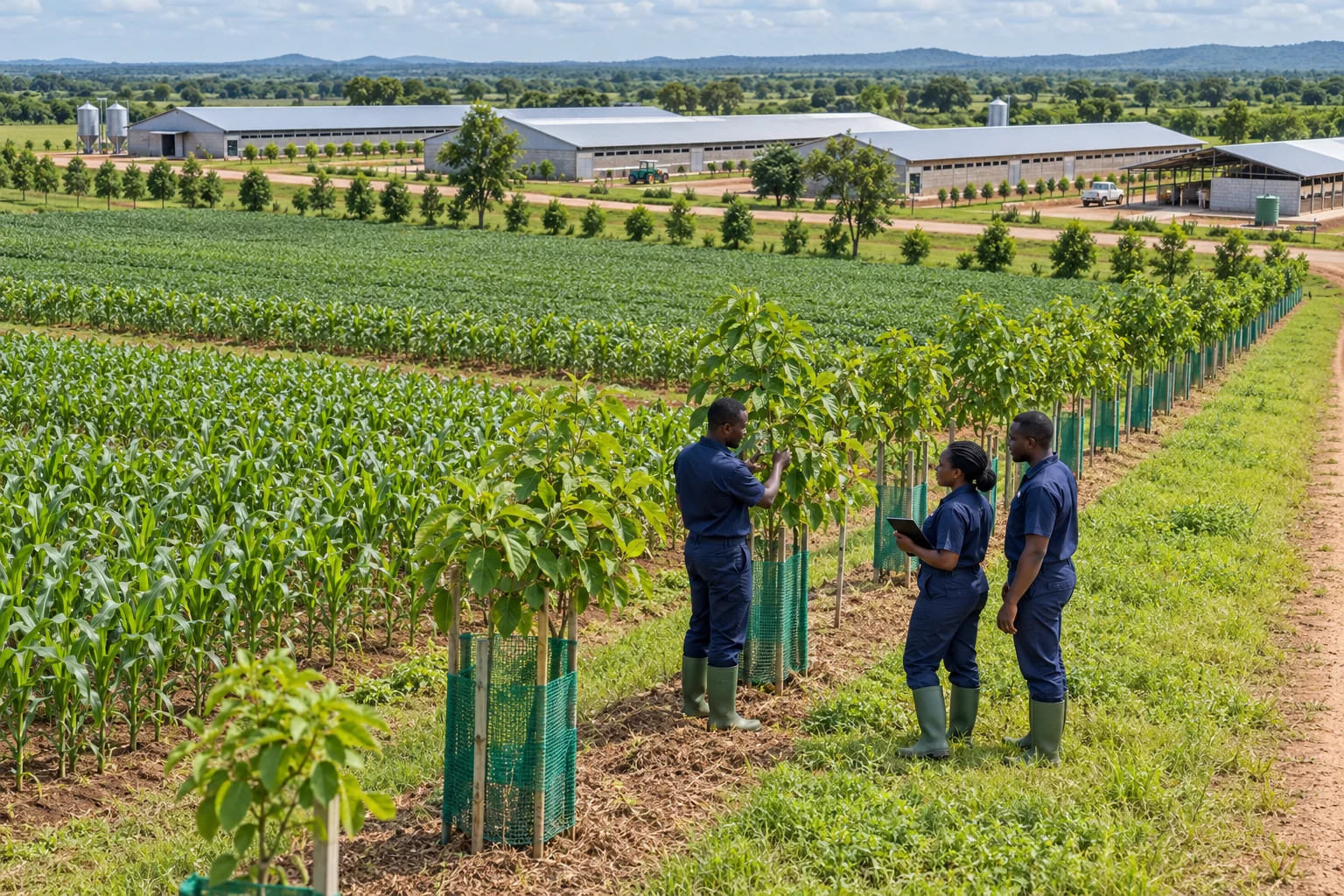
Trees can contribute to the wider landscape of a Ghanaian pig farm through planned boundaries, soil protection, useful products and habitat. Their role should fit the working site. Attractive planting is not enough if mature roots, shade or access conflicts later interfere with production.
Ghana includes coastal savanna, forest and northern savanna conditions. A cocoa agroforestry layout or a northern parkland example cannot simply be copied beside a Volta Region pig barn. Begin with local ecology, land rights and the purpose of each planting.
Choose the job before the tree
Map the farm and identify where a tree component might help. Distinguish a boundary, a field strip, an erosion-control feature and a separate productive tree area. Keep the aim specific enough to assess later.
Around livestock buildings, preserve airflow, inspection routes, emergency access and drainage. Trees should complement a properly designed building, not be assumed to correct a ventilation problem. Check mature height, falling branches and machinery access before planting.
Match species and position to the Ghanaian site
Discuss rainfall, soils, salinity where relevant, drainage, water access and species choice with local forestry or agricultural advisers. Assess roots, toxicity risks to animals, maintenance and potential spread. Do not assume that a tree promoted overseas is suitable because it tolerates heat.
If a product such as fruit or timber is part of the plan, establish how it will be harvested and used. Keeping pigs away from unsuitable plant material and preventing unmanaged access remain part of livestock management.
Resolve tenure and protect establishment
Agree ownership and responsibilities with landholders and other legitimate users before investing. Ghanaian producer experience highlights the importance of land and tree rights. Discuss the applicable arrangements locally rather than treating a planting as proof of ownership.
Assess useful existing trees or suitable regrowth before clearing and replanting. Protect selected plants from accidental damage, fire and browsing under a practical plan. Maintenance and survival through difficult weather matter more than the first planting-day photograph.
Measure whether the planting does its job
Keep a simple map and record species, dates, survival, maintenance time and the intended benefit. Inspect for blocked drains, new pest or access concerns and crop competition. Review changes over several seasons rather than judging one rainfall period.
West African parklands offer useful experience with trees in working landscapes. Transfer the questions about purpose, protection and management, while reassessing species, tenure and livestock implications for the Ghanaian farm.
Take it back to the team
Your practical checklist
- State the purpose of each planting.
- Check local species, soils and mature size.
- Protect ventilation, drainage and livestock access.
- Agree tenure and maintenance responsibilities.
- Track survival and practical benefits over time.
Sources & further reading
Start with the Ghanaian evidence and services below. The location and application notes explain how regional and international references should be used.
Ghana · agroforestry and producer experience
FAO Forest and Farm Facility: producer work in Ghana (opens in a new tab)Local examples emphasise land rights and suitable enterprises. Cocoa and northern parkland systems are not ready-made layouts for a Volta Region pig unit.
West Africa · landscape reference
FAO: agroforestry parklands in West Africa (opens in a new tab)Regional tree-management experience. Match species, rainfall, tenure and livestock safety to the actual Ghanaian location.